For the 2018 Spring Bank Holiday, we took off to the south of UK for some backpacking, wild camping and a bit of climbing. Our destination was the Jurassic Coast, which stretches for about 96 miles from Exmouth to Swanage and is known for its natural rock formations (such as Durdle Door), cliffs, coves and abundance of fossils. In fact, it is mainly due to that last aspect that Jurassic Coast was inscribed on the UNESCO World Heritage List in 2001, making it the first wholly natural World Heritage Site in the United Kingdom. Even today, 17 years on, only 31 sites in Britain have been recognised in that way. While for some the Jurassic Coast might just be a palaeontologist’s paradise, we guarantee that even if analysing animals’ bones isn’t your thing, you are still likely to enjoy yourself here.
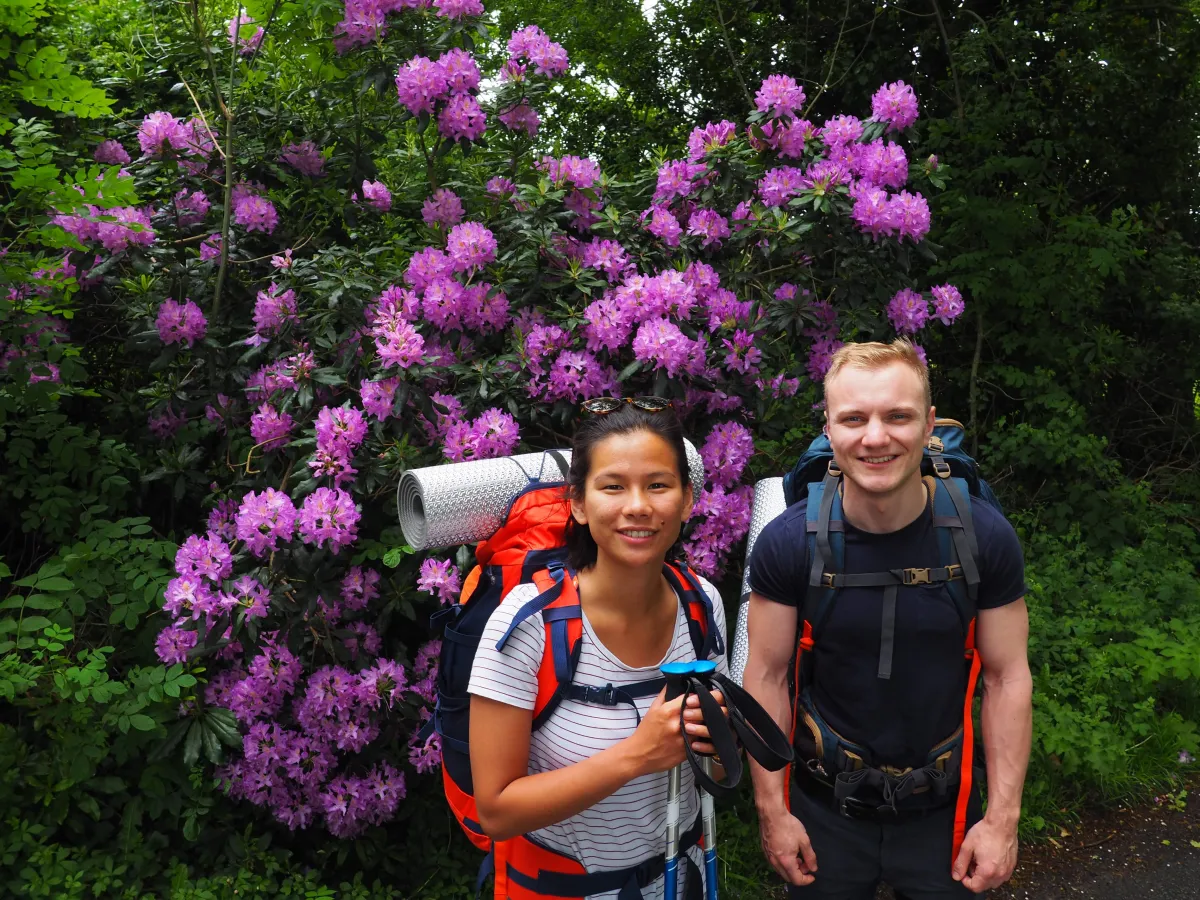 Don’t look at Mati’s biceps, look at the flowers!
Our Circular Route
One of the cool things about the Jurassic Coast is that there is a footpath which connects Exmouth and Swanage, providing an easy way to discover all the attractions this UNESCO site has to offer. In fact, that coastal path is a part of The South West Coast Path, which stretches along the coast of South West England for an impressive 628.5 miles, making it the longest National Trail in the UK. To walk it all, that would be a trip! Ain’t nobody got time for that though, so we thought we could do it in stages, starting with a Swanage to Weymouth section. Unfortunately, due to certain constraints (most important one was that Maciek had to watch the Champions League final on Saturday) we had to modify our plan and in the end settled for a circular route beginning in Stoborough Green, continuing on to Corfe Castle, Swanage, Worth Matravers and Kimmeridge before returning to the starting point. Albeit chosen a little randomly, it turned out to be a really great itinerary, highlights of which we present below in a chronological order.
Hartland Moor National Nature Reserve (very wild)
That was probably the biggest positive surprise of the trip as far as natural attractions are concerned. It was really wild and swampy out there, we saw no humans for close to two hours and felt really connected to nature. What’s more, we came across deers (a whole herd!), horses, cows, bulls and even baby foxes. We’ve never been to the Highlands of Scotland but that’s pretty much how we imagine it.
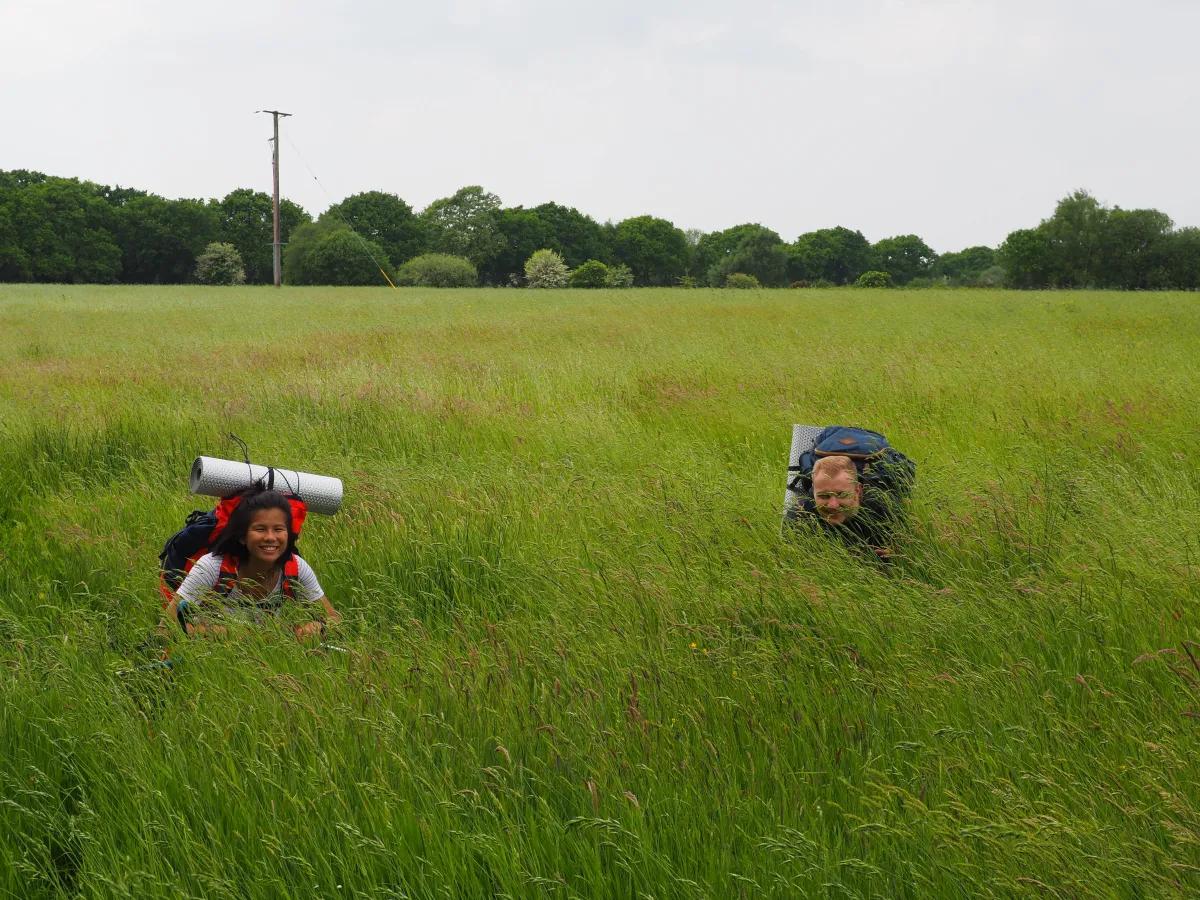
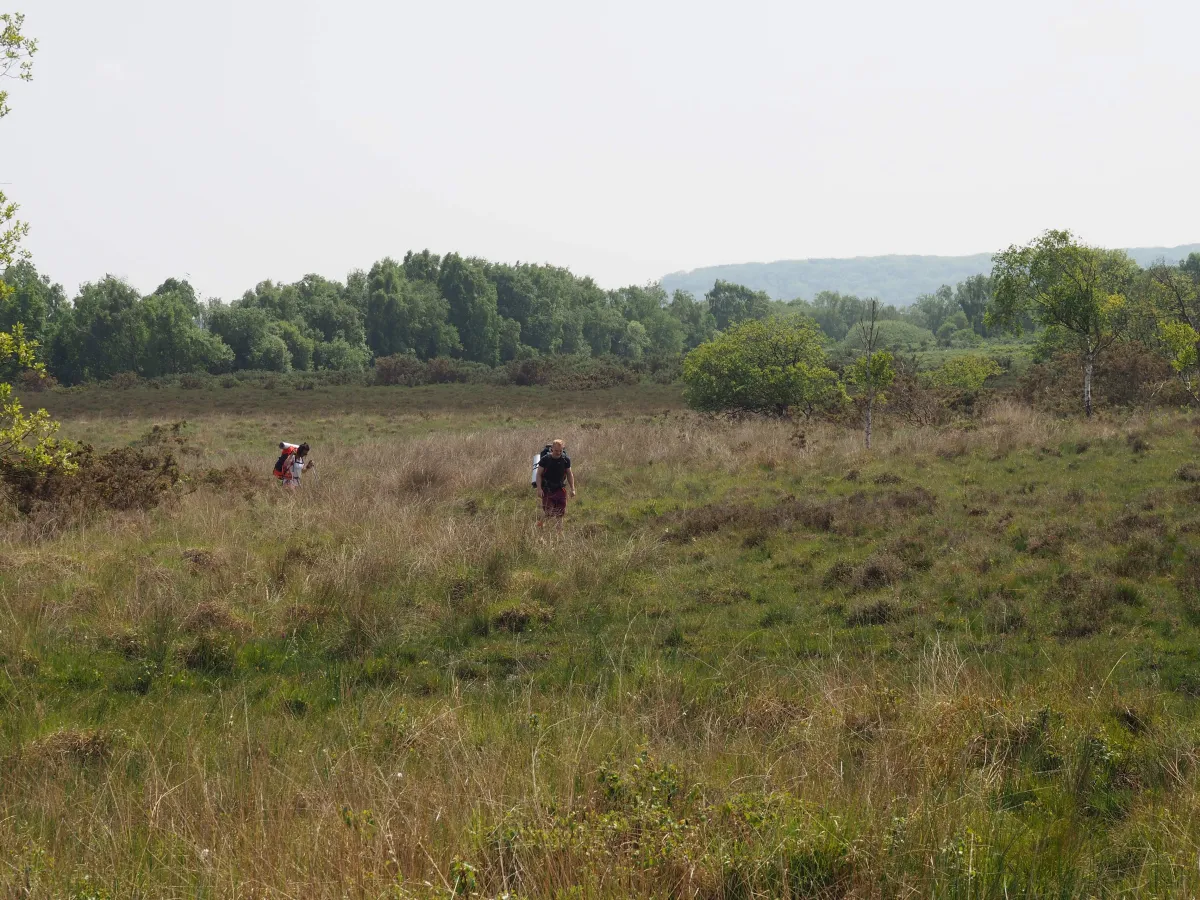 Struggling through the swamps of Hartland Moor. Better stick to the path!
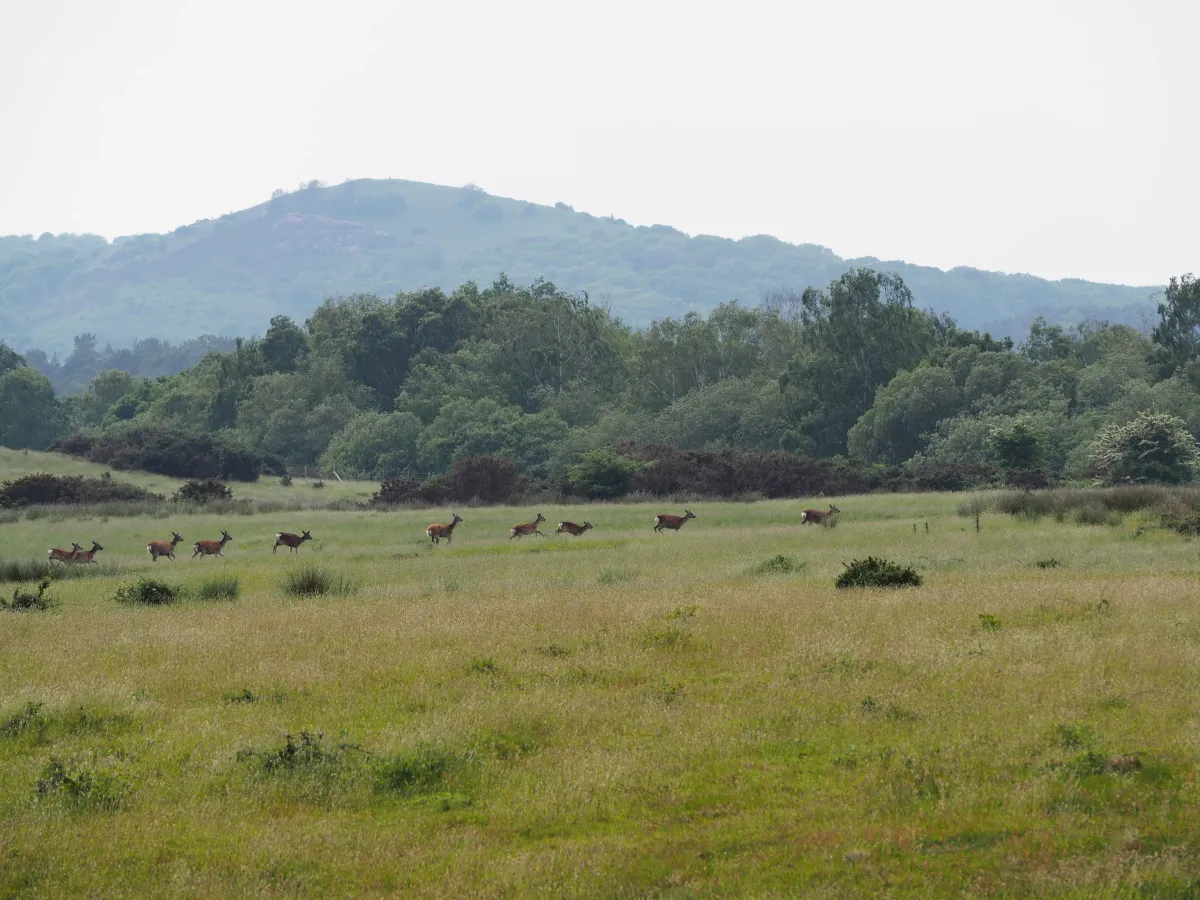 There were more…
Corfe Castle, cute town with beer gardens
This is the main historic site in the area and a destination of many tourists (1/4 million per year to be precise). This 11th century castle, or rather, ruins of a castle, overlook a really cute village of the same name. A good place to stop for a pint and/or lunch; both The Greyhound Inn and Bankes Arms Hotel have pleasant beer gardens. We went to the former and were slightly disappointed with the slow and unfriendly staff but the great live music compensated it - bank holiday perks. Regarding the castle itself, we didn’t enter and don’t think it’s worth £10 per person (free for National Trust members though) - there are loads of better-preserved castles in the UK.
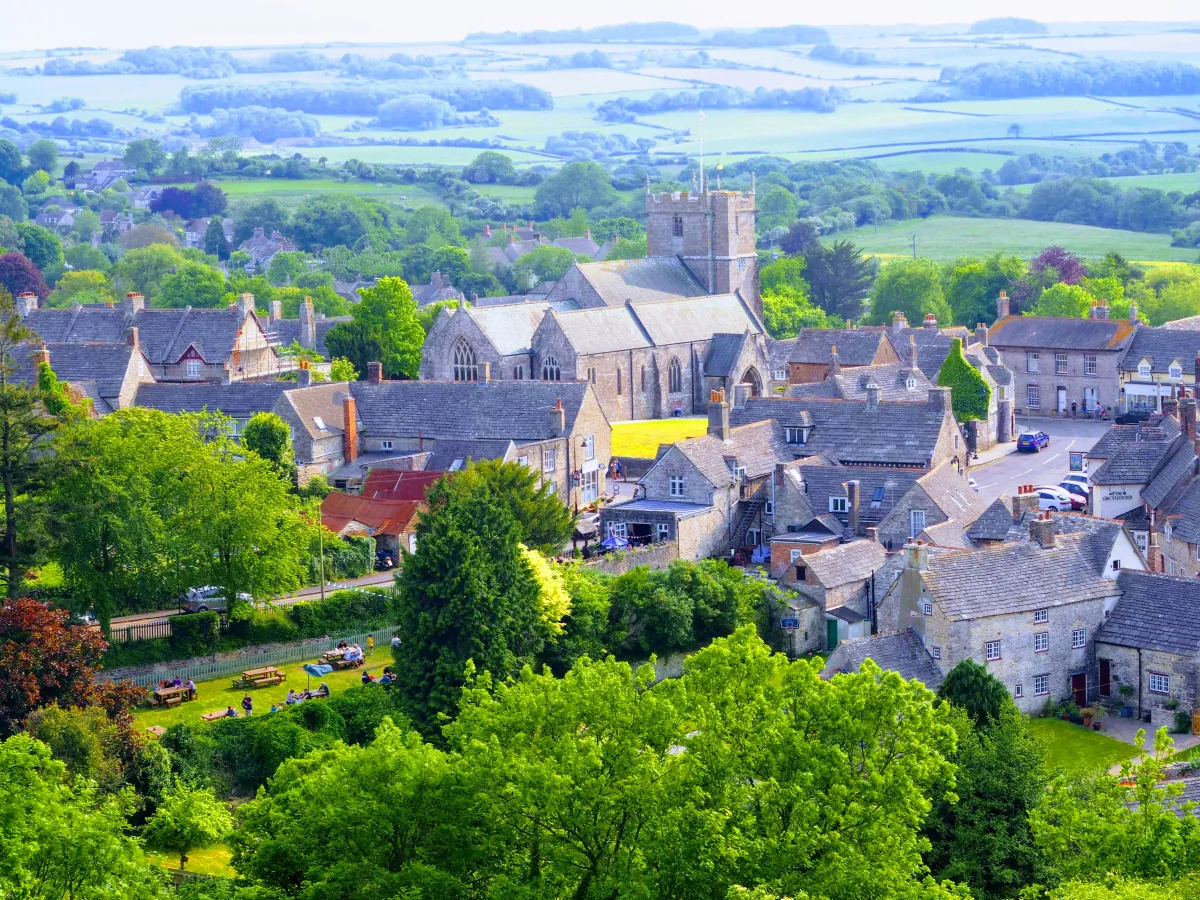 Corfe Castle (town). Cool beer garden in left bottom corner
Purbeck Ridge for a free viewpoint of the Corfe Castle
Another reason why we feel Corfe Castle is not worth the money is that you get a really nice view on it as soon as you get to the top of Purbeck Hills. It’s a ridge that starts just east of the village and ends at the coast just north of Swanage; it makes for a really pleasant 5 mile walk, with 360° views of the sea, Poole, Bournemouth and neighbouring villages. To get there from Corfe Castle, you get to Sandy Hill Ln, walk below the railway tracks and then, shortly afterwards, take a footpath on the left. A steep climb up the stairs takes you right to the start of Purbeck Ridge, where you should take some time to enjoy the views.
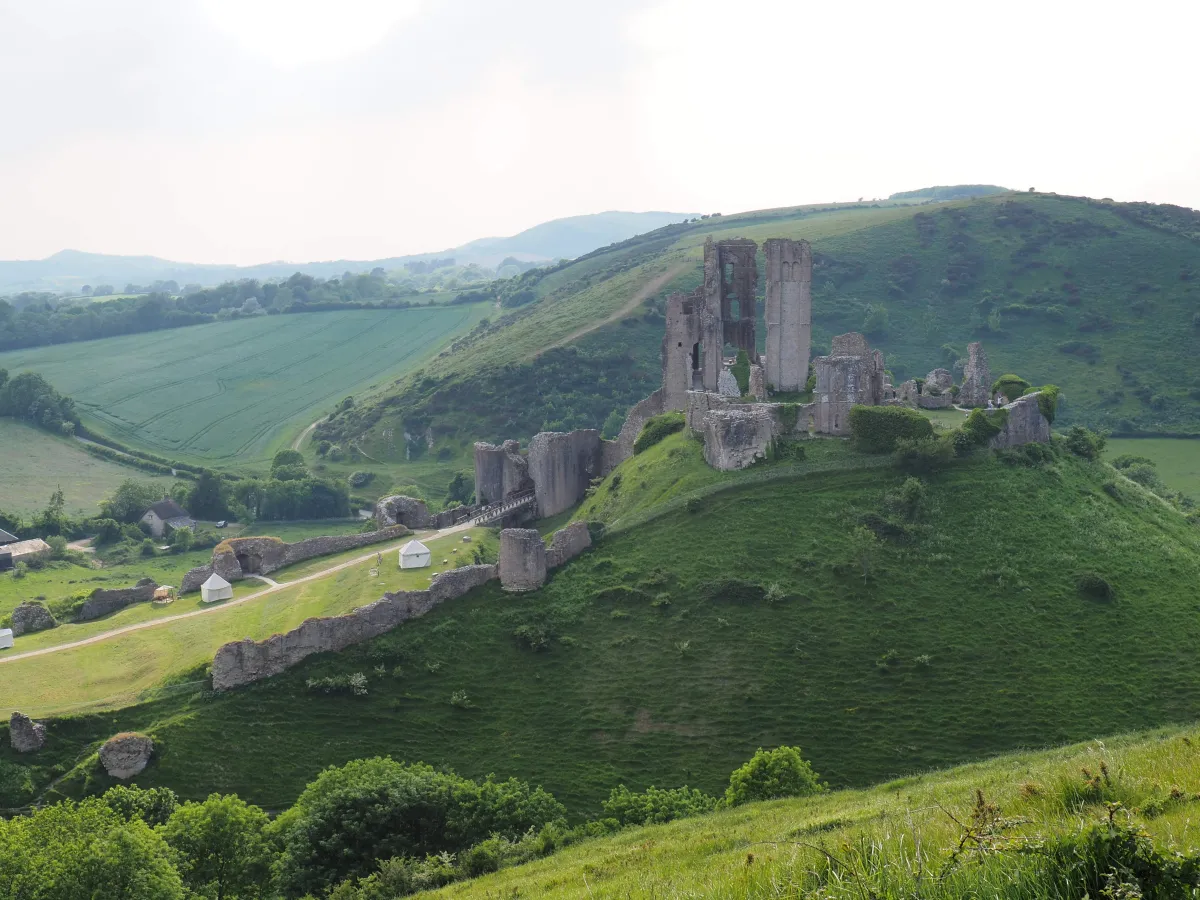 Corfe Castle (castle) viewed from Purbeck Ridge. Bunch of ruins really
Swanage and the Pirate Festival
On paper, there’s nothing special about this coastal town - a pier (with entrance fee!), beach, port, few pubs, ubiquitous smell of fried fish and seaweed, tacky street stalls and a mini theme park for kids. Still, we had a lot of fun there! All the pubs are pretty much on the same street, and so it gets pretty lively on a Saturday night. More importantly, most of them have live music on the weekend, which draws the crowds in; add to it the Pirate festival which was happening that weekend in Swanage and you get a recipe for a great night! Well, ok, Pirate festival sounds like a lame kids’ event, and it probably was pretty lame, but it was still fun to see a lot of people dressed up as pirates hanging out in bars and flooding the streets (costumes were really high quality).
Dancing Ledge, a multisport cliff
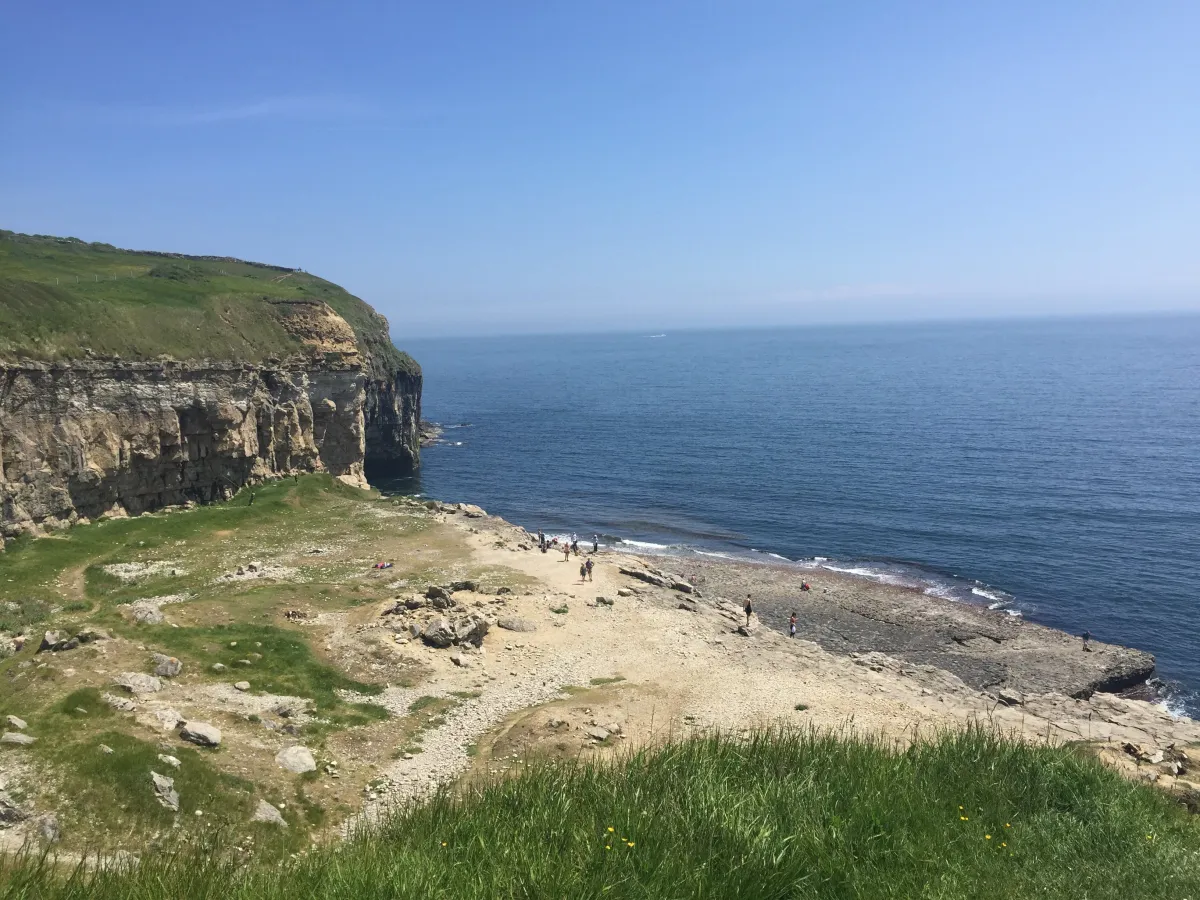 Two levels clearly visible
Fun place. It’s a broad, flat area of rock at the base of the cliff, with two levels, one just by the sea and the other one a few metres higher. Interestingly, getting from one to the other requires a tiny bit of climbing, nothing very tricky of course, but still. There might be an easy way at the far end of the area, but most people seem to scramble on the rocks. It’s not a great place for sunbathing or chilling due to hard surface, but there are a lot of activities to be performed there:
- cliff jumping - multiple platforms for jumping to the sea, with varying height.
- coasteering - we never came across this sport (?) before, but it seems to combine swimming, jumping, diving, scrambling, caving, canyoning and whatever else you can do on a rocky coast. There were some organised groups doing that while we were there, we also heard it requires a license. Besides, you need some equipment, such as a wetsuit, water shoes and a life jacket. It looked a little lame when done in those big groups, but you gotta start somewhere…
- climbing - Dancing ledge is one of the most popular climbing crags in the area, especially among beginners. Most routes start at the base of the cliffs and are bolted, but there’s some closer to the sea, including hard-looking overhangs (bolted too). The easiest routes start on the lower level and lead up the little cliff to the higher level; top rope needs to be set up for those.
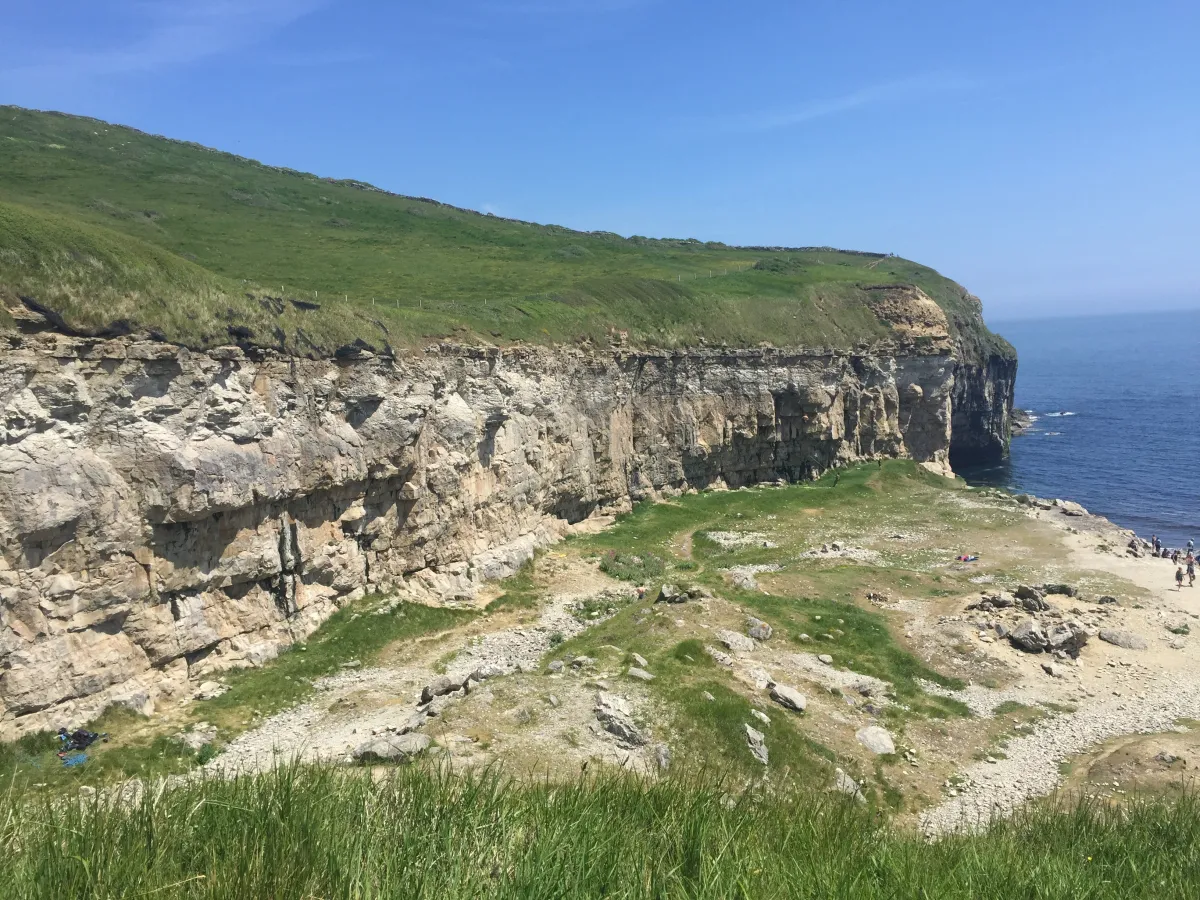 Most climbing routes are on that cliff
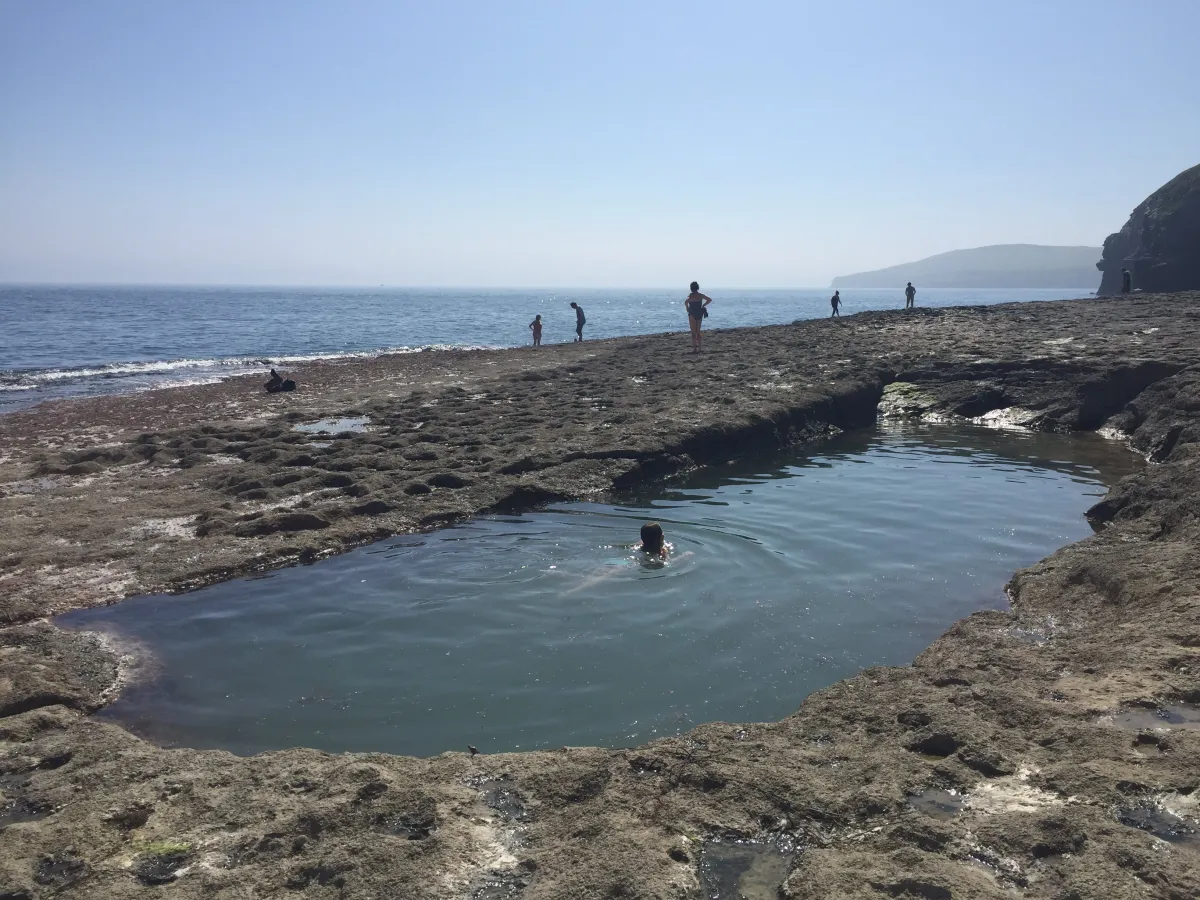
Another rarity at Dancing Ledge is a swimming pool located in a rock basin on the lower level, disconnected from the sea. Popular mostly with kids and their fathers, not very tempting to enter, but an interesting sight.
The Square & Compass (Top 5 UK pub)
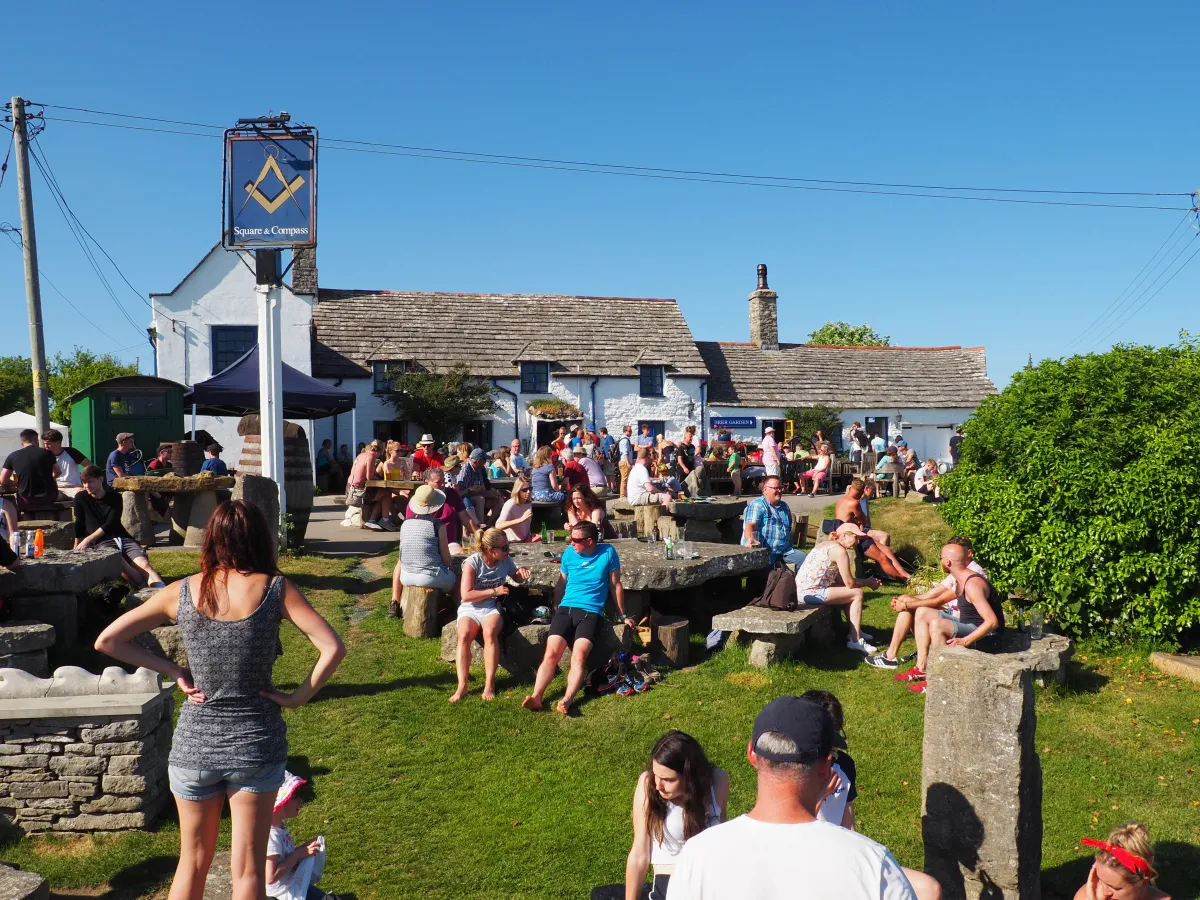
A must-go pub in Worth Matravers. If you approach it from the east, walking along the coast path, on a sunny weekend day, you should see it from the distance thanks to high numbers of people occupying its front yard. Fear not though - regardless of how busy it might seem, you will be able to find an empty spot on the grass or at one of the long tables they have there. A cool thing is that most of the tables and benches outside are made entirely from stone. Also, look out for a dog standing on top of the roof, looking like he (or she) is posing for photos - it’s a local symbol, they even named one of the ciders after him/her. And yes, cider is the drink to go for there, they make it themselves and have a really wide variety, so regardless of whether you like it dry or sweet, cloudy or clear, sparkling or still, dark or light, weak or strong - you should be able to find something for yourself. And even if, like us, you’re not a fan of cider in general, get a pint and try to enjoy it - there’s probably few other places where you’re more likely to appreciate it.
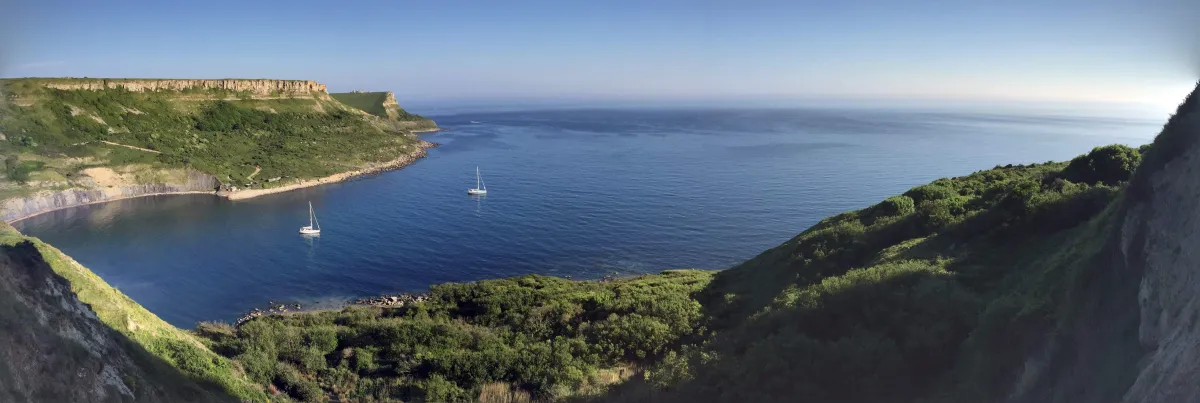
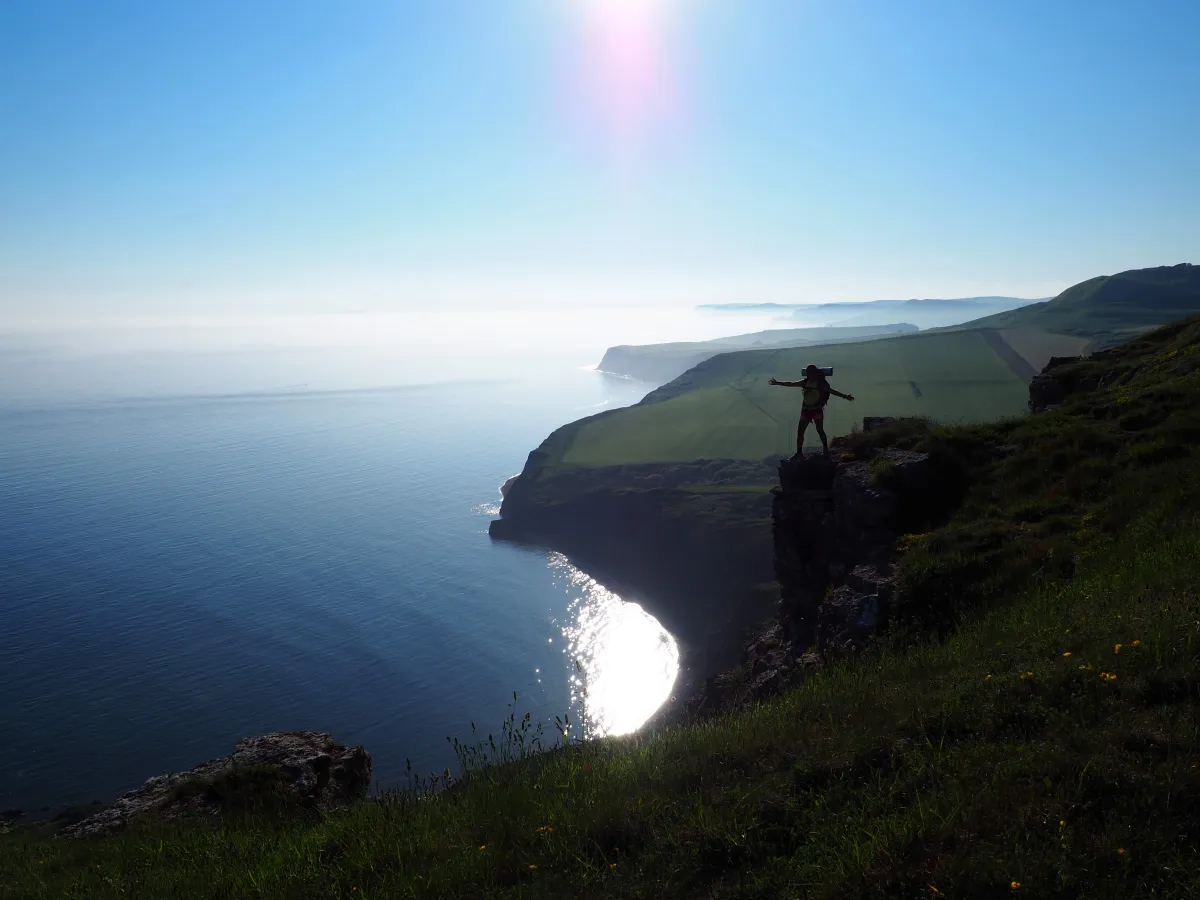
Hans Tout = breathtaking views
Awesome scenic point on the way from Worth Matravers to Kimmeridge Bay - we’ll let the photos below speak for themselves.
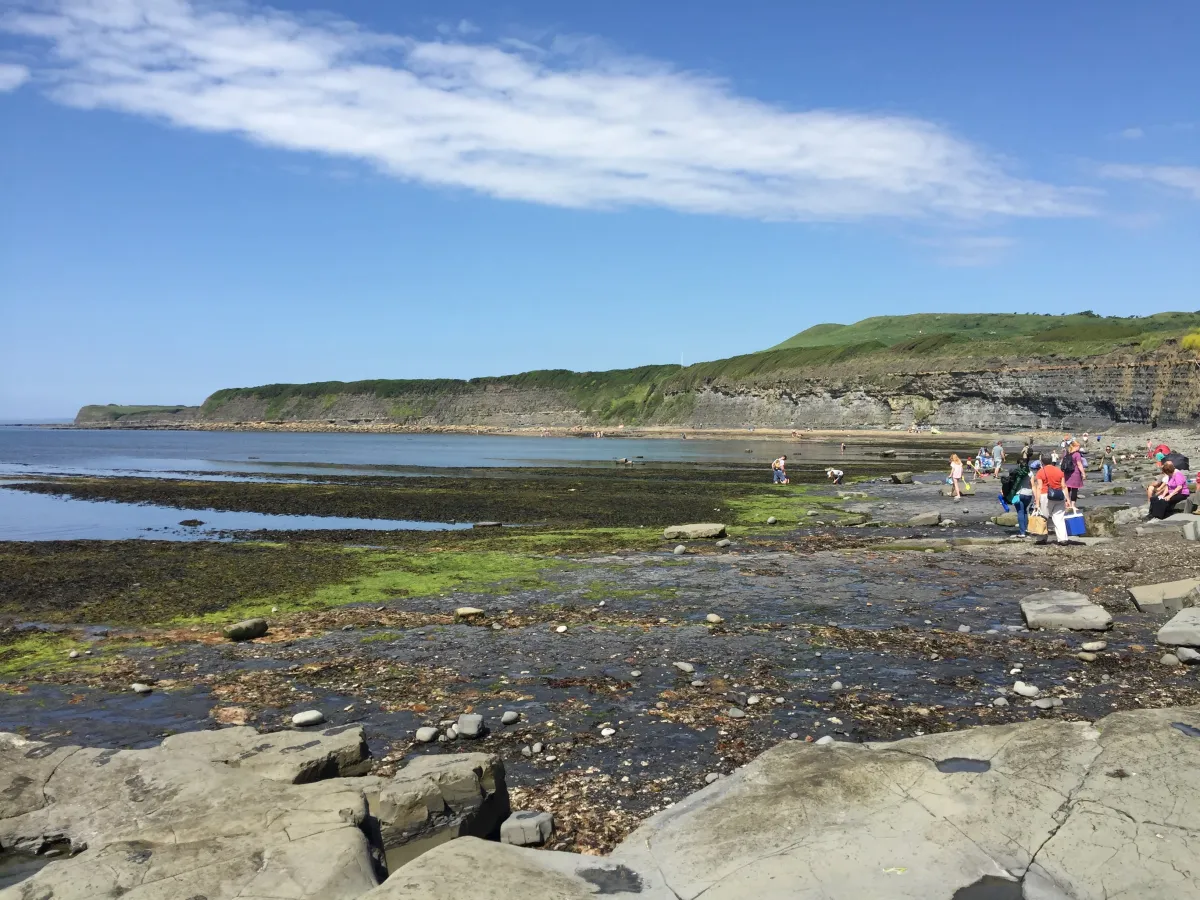
Kimmeridge Bay and the Clavell Tower
Pretty bay with an average beach. There’s vehicle access (£5 full day parking) and as a result many people come on the weekends and holidays. There’s an interesting story involving the tower which overlooks the bay from the east side. It was built in 1830 as an observatory and folly. However, due to cliff erosion, Clavell Tower, as it’s called, was in danger of falling into the sea. In August 2006, even though it wasn’t used for any purpose, Landmark Trust decided to move it 25 m inland. Thing is, it’s not easy to move an 11m tower; what they did is first took it apart, brick by brick, and then built it again in a better spot. It took two years and one million pounds, all so that it can stay empty for another hundreds of years. Well, the plan was apparently to rent it out to holidaymakers… good luck with that. It seemed empty when we were there.
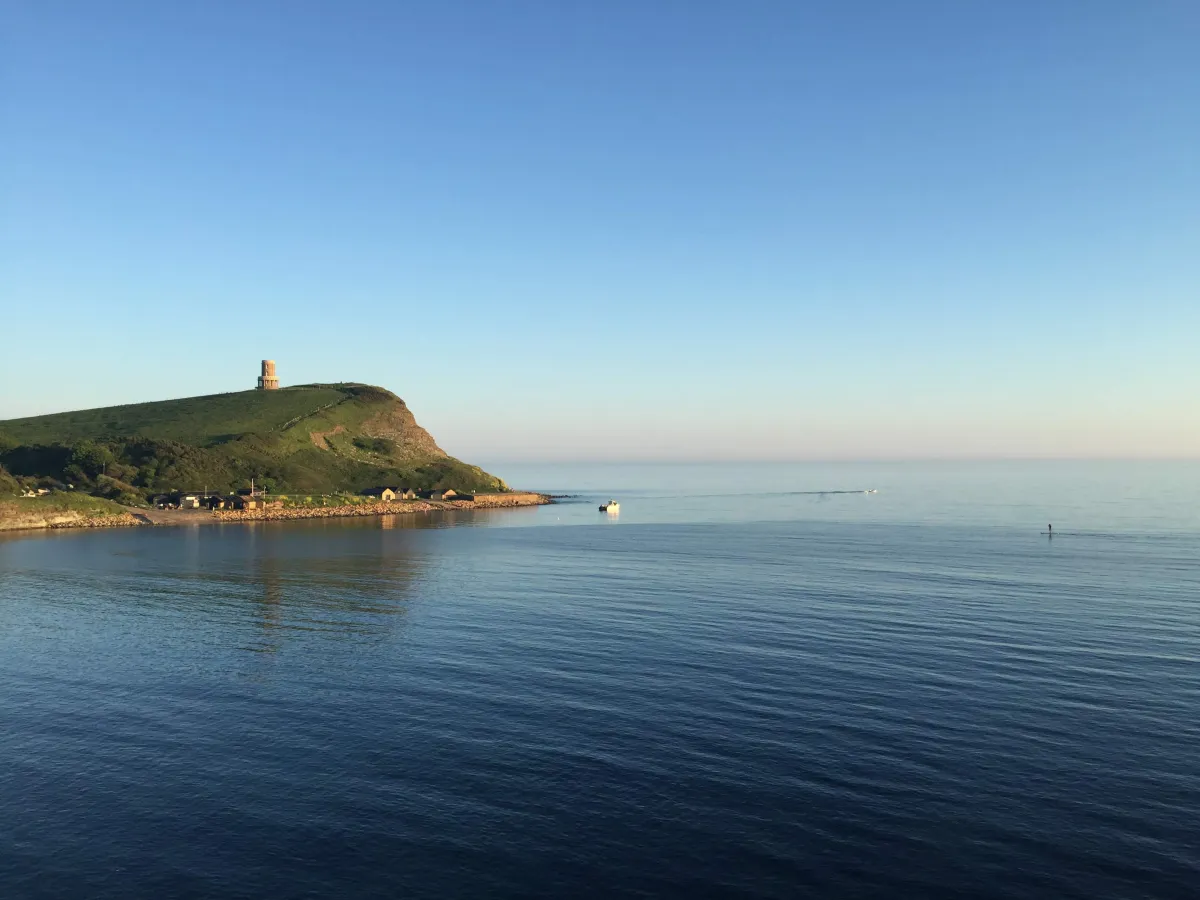 View from Kimmeridge Bay. Clavell Tower on the left
Climbing in Winspit Quarry after 3 days of backpacking, cos why not?
Call us crazy or whatever you want but after having walked roughly 50 miles over 3 days with 12 kg backpacks, we still went climbing in the evening of day 3! Actually, Winspit Quarry is quite an interesting place to visit, climber or not, as it has been the movie set location for many series and films, “Doctor Who” being one of them, due to its particular disused state.

For us however, the sole reason to visit this former quarry was its reputation as one of the better crags for beginner sports climbing in the area.

The climbs themselves, in our opinion, were not too great, but maybe that’s due to our tiredness, slippery limestone and/or lack of time (literally soon after we arrived, all the others climbers were gone so you can guess how late it was). Still, we managed to cover a few easy climbs on the Quarryman’s Wall, and practiced some abseiling too!

We’ll hopefully come back there for a full day at some point in the future and post a more detailed report of the crag.
Practical info
Below are some things we’ve learned during our hike which we wish we’d known beforehand - hopefully some of that could be useful for those of you planning a trip to Jurassic Coast.
- Mobile phone signal is scarce, so plan ahead (e.g. download offline maps, check bus/train schedule etc).
- There are very few shops anywhere near the coast between Swanage and Weymouth [and they respect their very short opening times] (the one we know of is near Durdle Door). So pubs/restaurants are the way to go - usually one per village.
- If you plan on hiking inland too, be aware that there are many footpaths in the area - majority of them not visible on Google maps and not known to most of the locals. Hiking maps or guidebooks will definitely be helpful, satellite view in Google maps can be surprisingly useful too at times. As a general rule of thumb, if you wanna go from village A to village B, odds are there’s a route connecting the two consisting mostly of footpaths - you just have to find it (and it might be a little longer than the road path).
- There’s a military area called Lulworth Ranges, stretching between Lulworth Cove and Kimmeridge Bay, which is generally open to the public on the weekends only. Google “Lulworth Ranges opening times” to make sure it’s open on dates you’re planning to be there to avoid a lame inland detour.
Wild Camping
There’s many good wild camping spots on the way - just make sure it’s remote.
- Day 1, we camped in Durlston Country Park, in National Nature Reserve (average)
- Day 2, on a beach on a little cape just west of Kimmeridge Bay (awesome spot), you can reach it by following the sea shore from the bay or following a sign “Danger of Erosion” from the military camp.
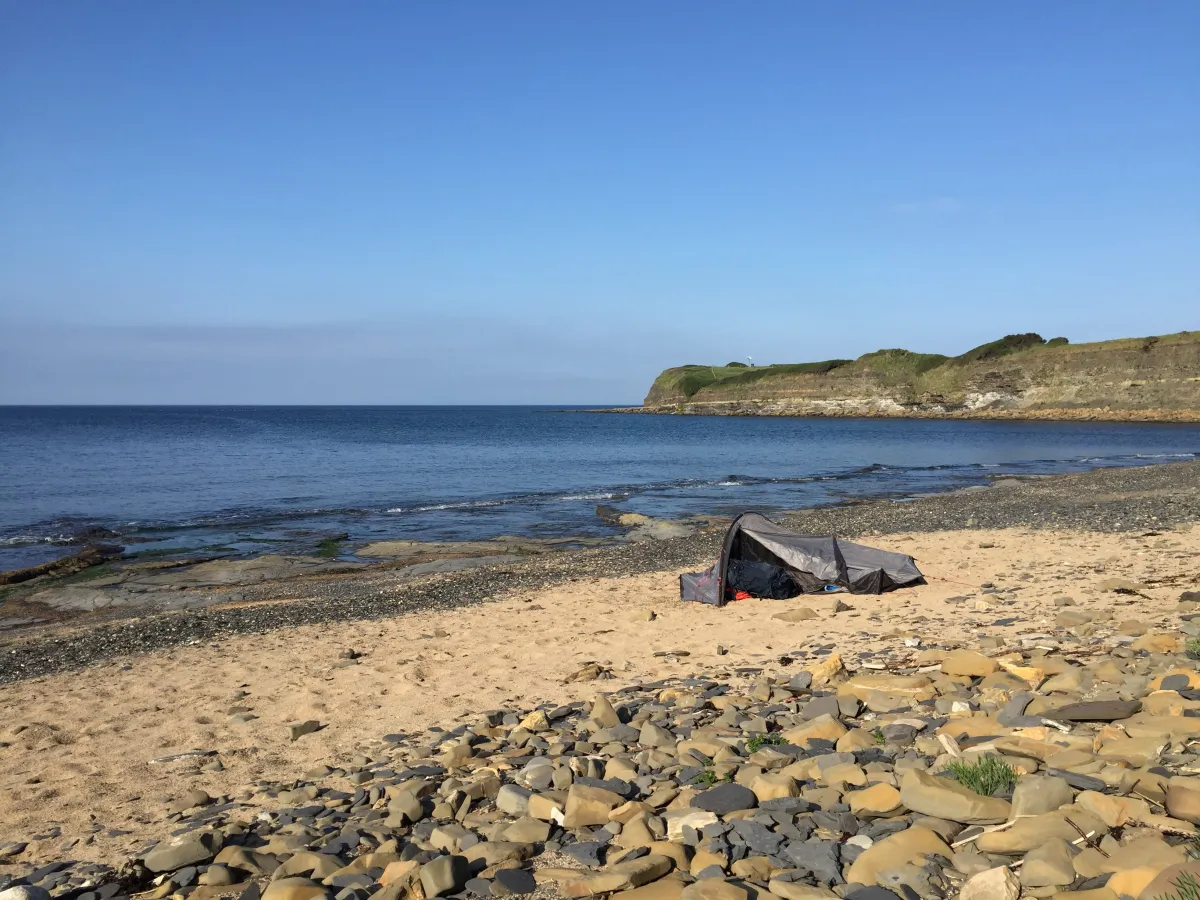 Wild camping on the beach. Nice spot!
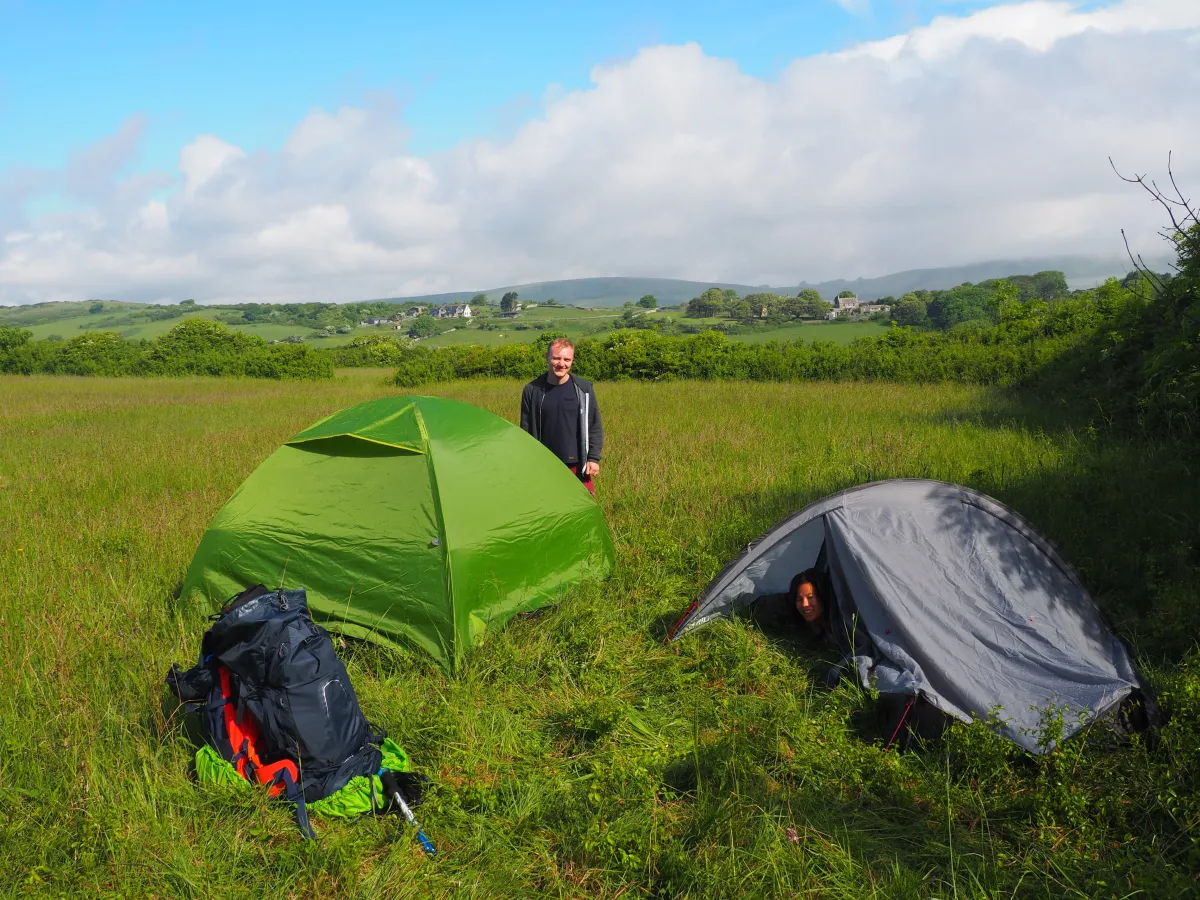
 Same spot 8 hours earlier. Fluorescent tent!
See you in the next post!
 Playing soldiers