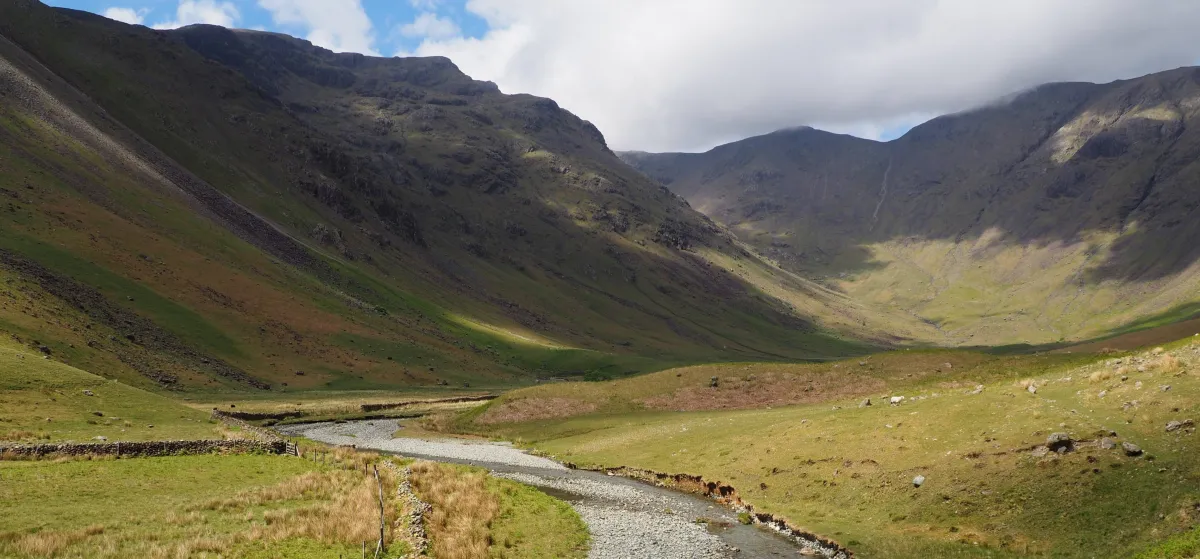
TL;DR A moderately difficult scramble in Lake District. Suitable for scrambling beginners/novices (ideally with some rock climbing experience) who are looking to verify and improve their protection techniques. No real exposure, many escape routes and easier alternatives. Good views at the top are a reward.
Difficulty: grade 2/3
Location: Wasdale Head, Lake District
Time: 3-6 hours if starting from Wasdale Head (1-3h of which scrambling)
Exposure: easy
Strava:
Approach
Start in Wasdale Head (free parking available).
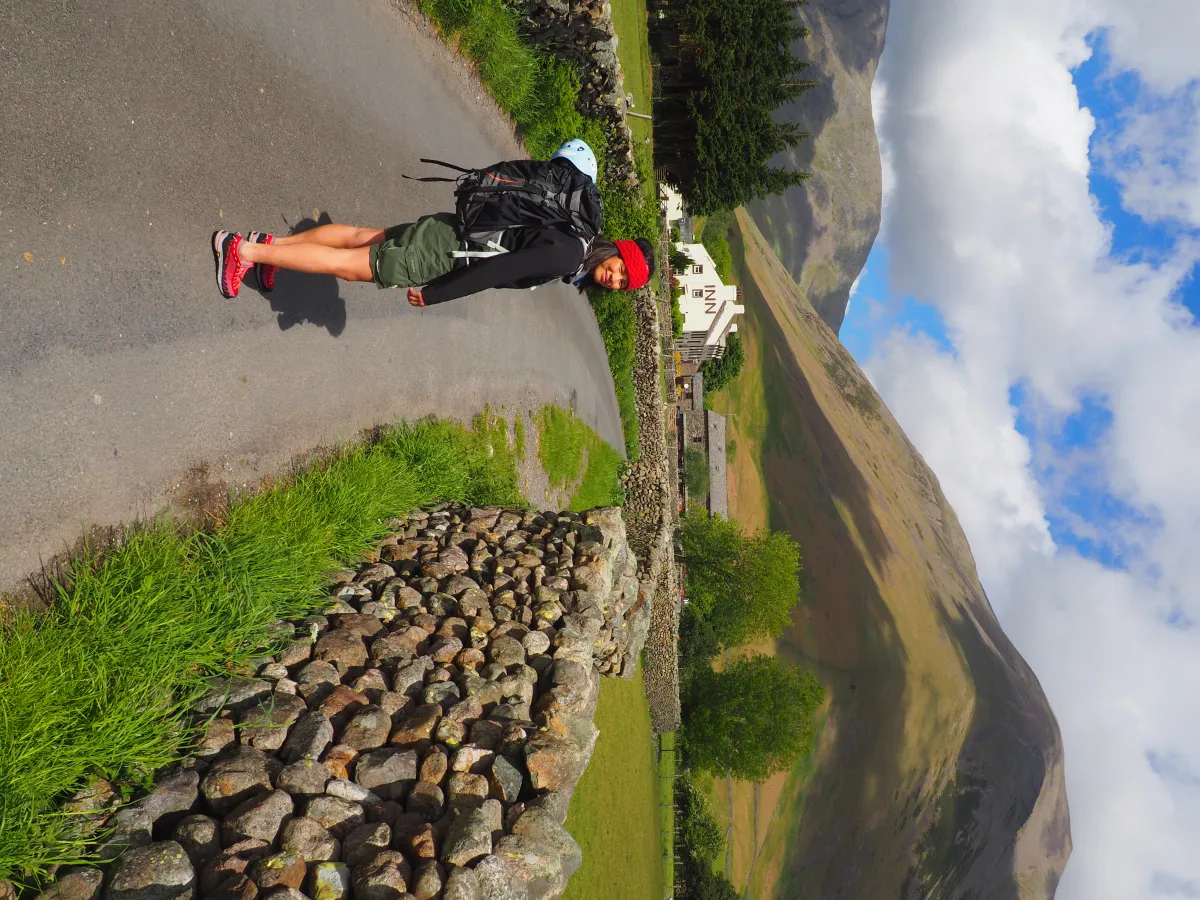 Start by heading towards the Inn
Head towards the Inn; once you approach the buildings, turn left towards a bar (Ritson’s Bar); pass the bar and turn right to walk alongside a river.
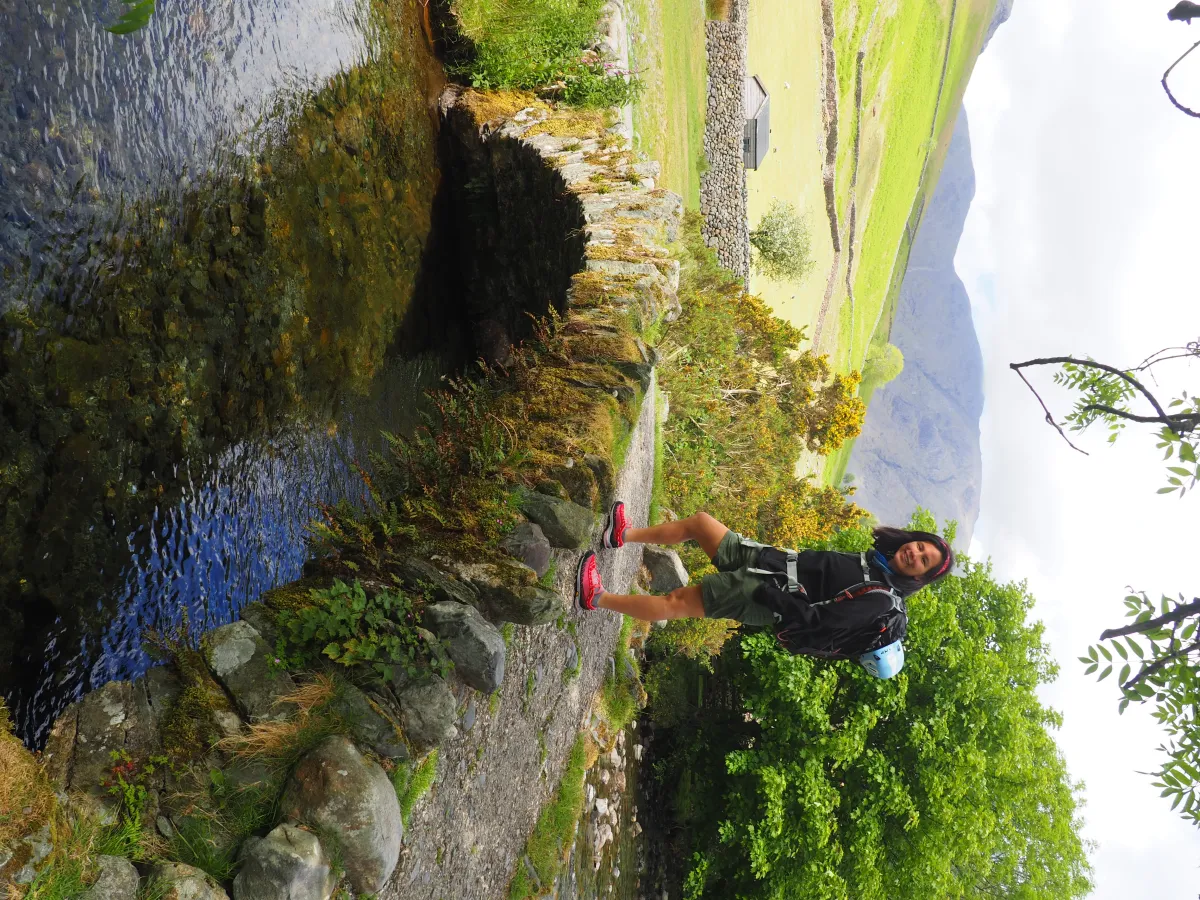 While it may be tempting to cross this bridge, don’t do it
You will be following that river (without crossing it) for the next few miles. For now, head along the river and whenever paths split, keep left. The path leads uphill as you enter the valley of Mosdale. From then on you pretty much follow the valley; be careful when you see a big pile of rubble - natural path turns right, but you must stick to the left. In fact, you should already be seeing Wistow Crags in the distance - it’s the most black rock formation you see ahead of you and one that begs to be climbed.
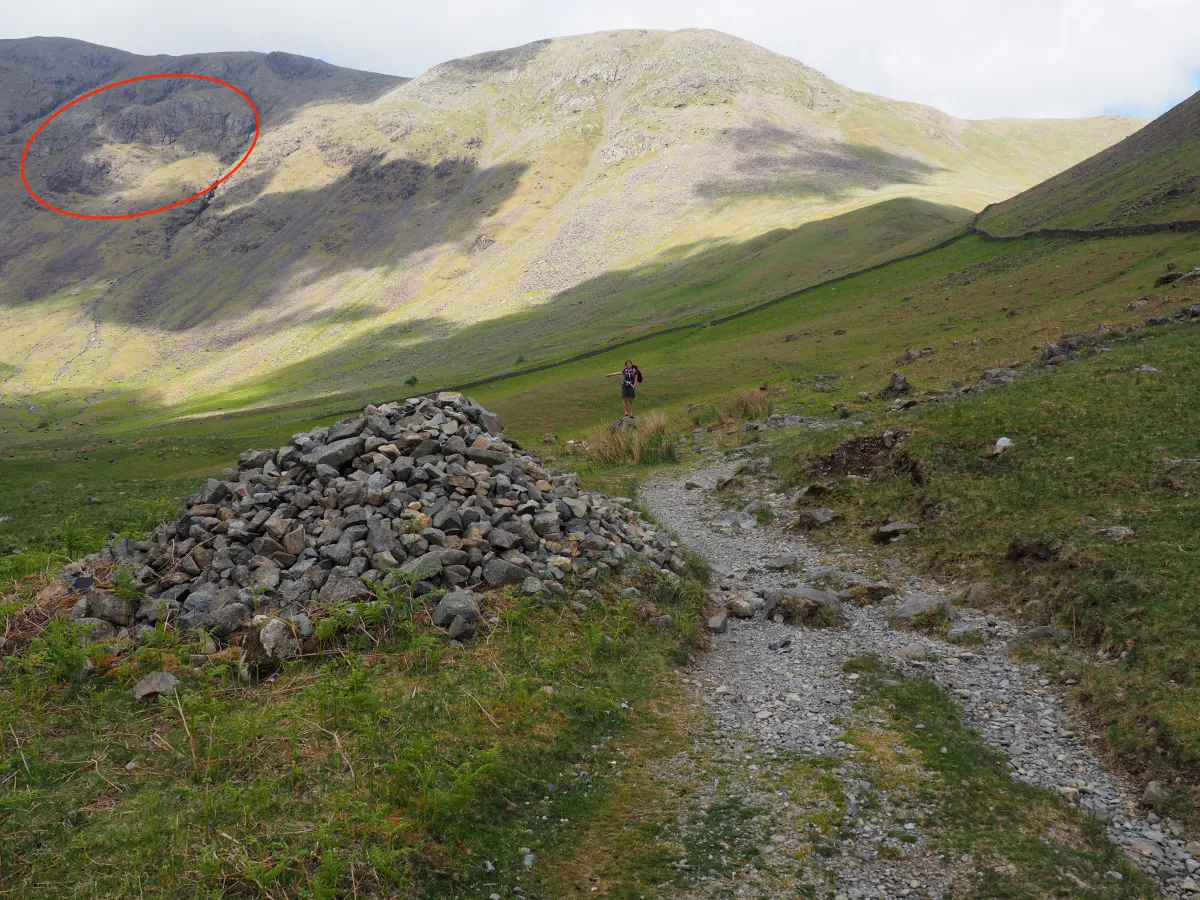 Unobvious fork near a pile of rubble - stay left! Wistow Crags encircled in left corner
Once you make that left turn near a pile of rock, path becomes less obvious and ground may be wet here and there. Hopefully, by now you know where you’re going so just use your judgement to pick optimal route. As soon as your ascent gets steep, you’re very close to the base of Wistow Crags and the scrambling itself begins shortly.
The Scramble
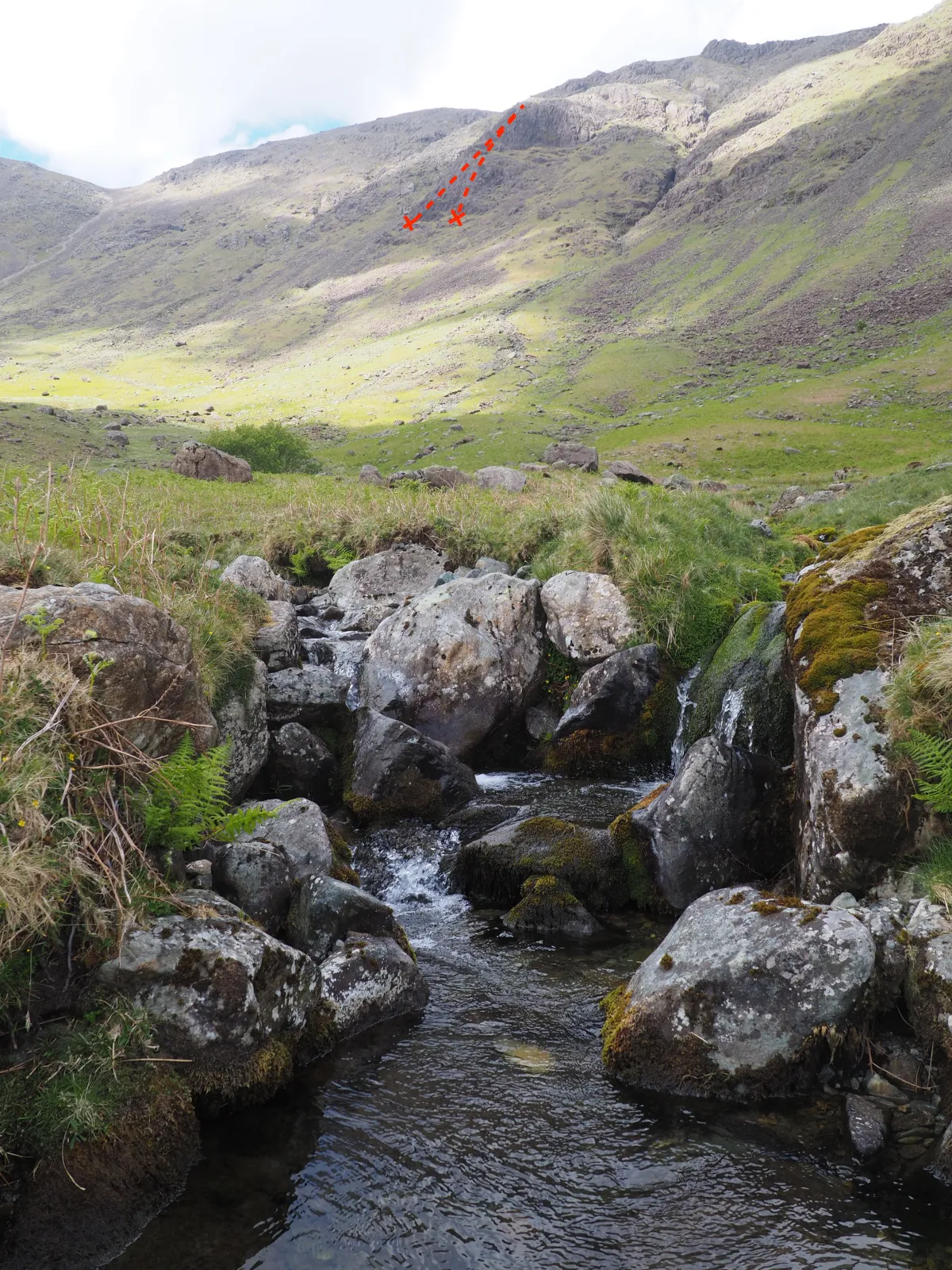
We’re not going to tell you exactly where to start; from our experience, it’s quite hard to find the right place anyway. For detailed description of the scramble, see here. The established scrambling route follows the left side of Wistow Crags and roughly corresponds to the left path depicted above. However, we started more to the right and it was also fun and not overly difficult.
Generally, there are many escape routes and ways to avoid the hard sections. For instance, roughly midway through the scramble, we decided to proceed along a nice looking (small) slab. It turned out to be a little harder than we had thought. In the end, we persevered and managed to climb it, but we could have backtracked at any point and chosen an easier alternative.
Hence, our advice for you is to simply pick an appealing line and go for it. In a very unlikely event of getting stuck, an abseil retreat will always be possible - just make sure you know how to do it and have a spare sling or a piece of rope to secure it. But the cool thing about Wistow Crags is that there are so many different ways to proceed and at least one of them is easy.
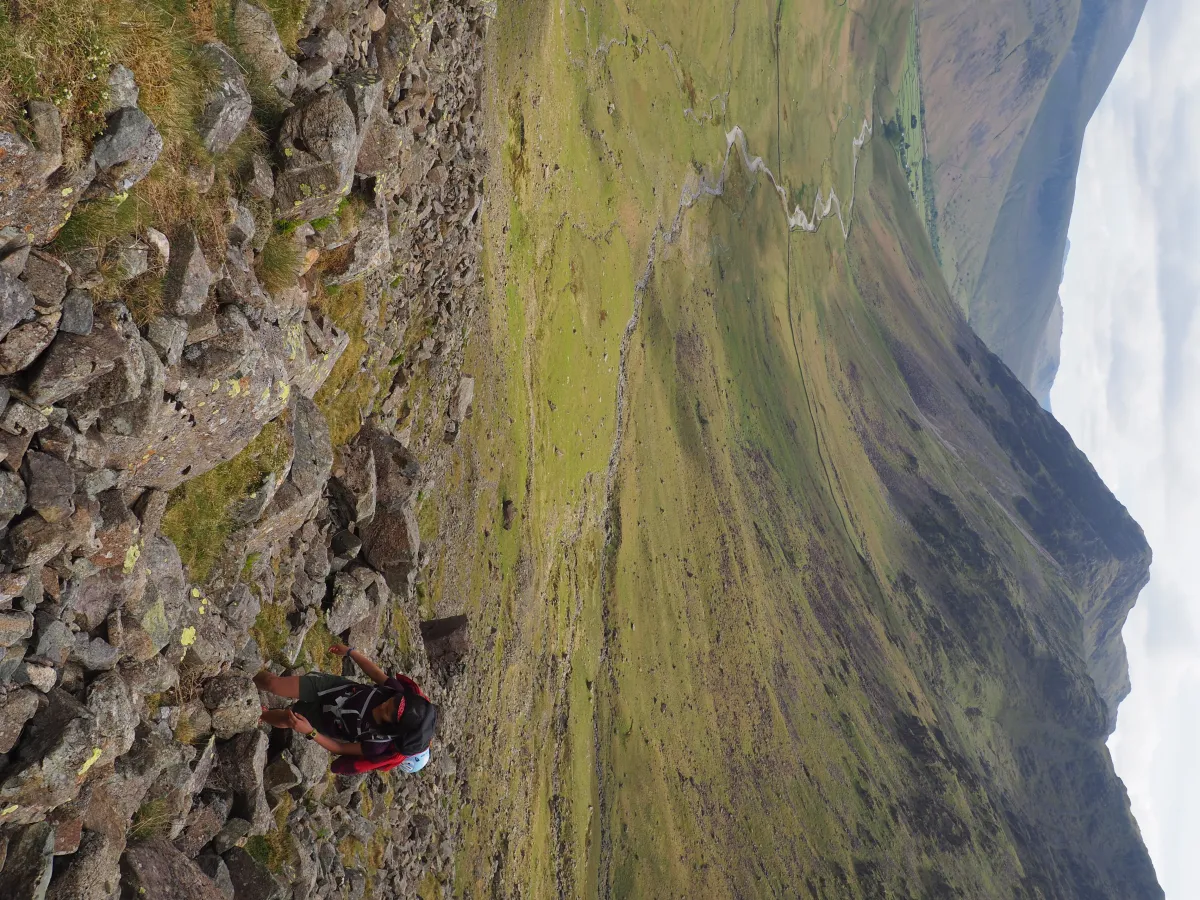 Almost at the base of the scramble
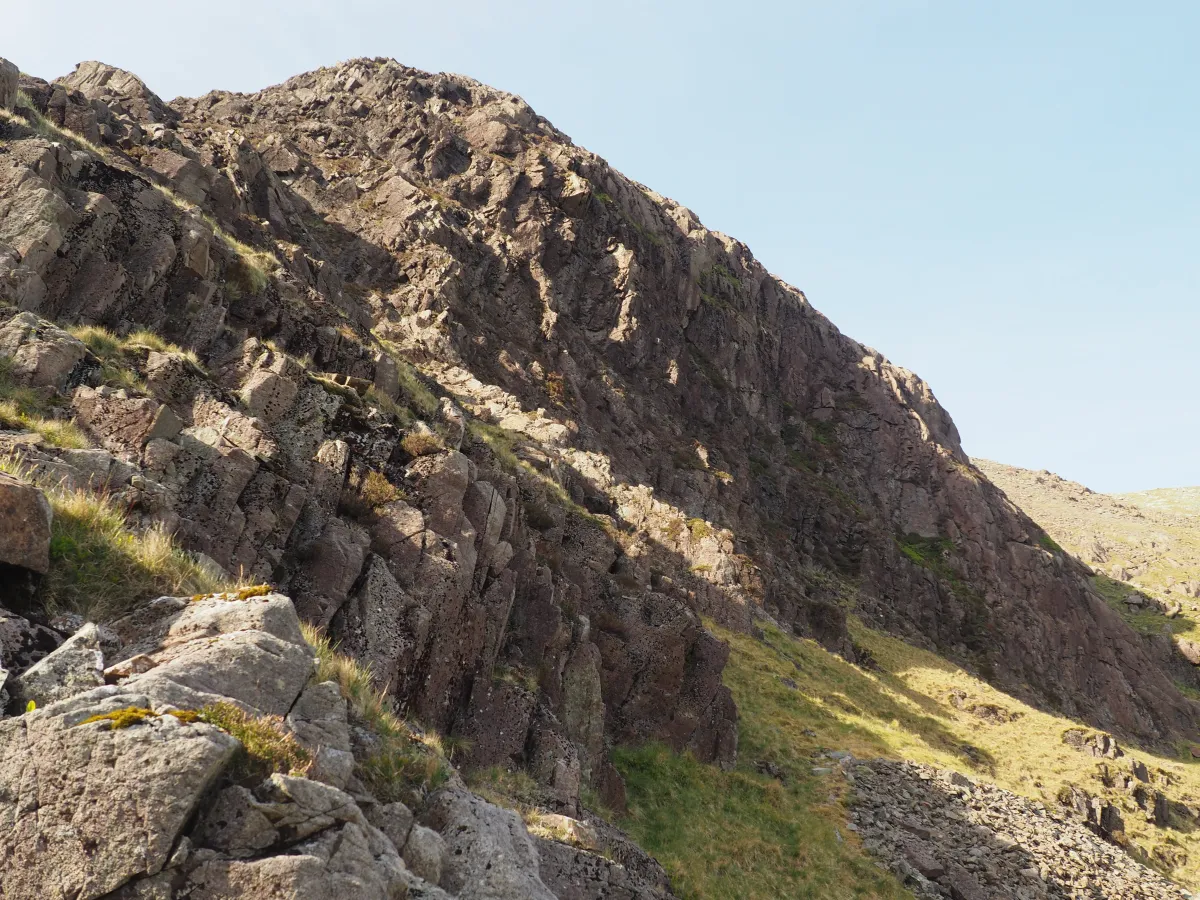
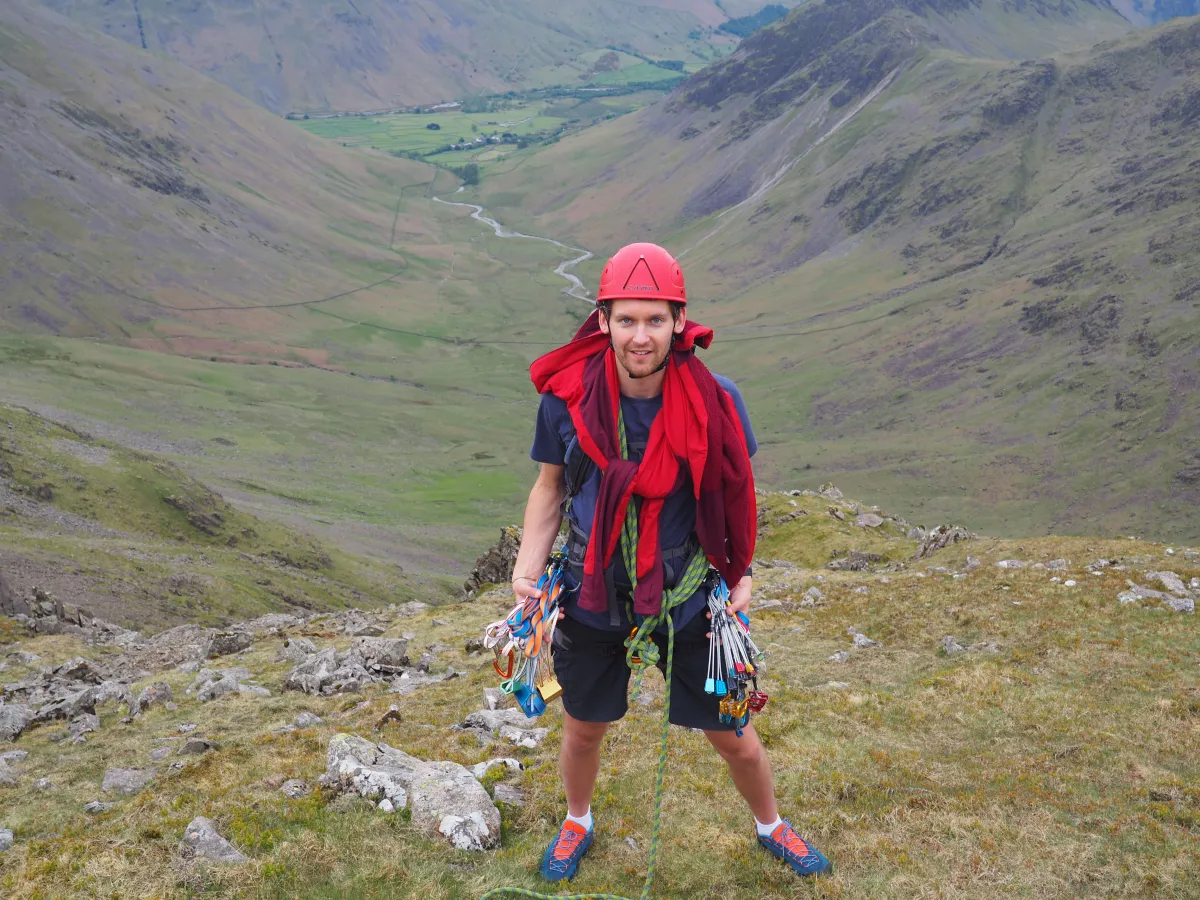 Happy at the top
At some point, the terrain flattens and a very short walk takes you to a ridge. From there, a descent is possible, or you can continue uphill to reach a nearby peak of Pillar. In fact, if you wanna make it a full day out, a scramble up Pillar Rock (a rocky outcrop next to Pillar) will make a great link up. Interestingly, a 1826 ascent of Pillar Rock by John Atkinson is the earliest recorded rock climb in the Lake District. Today, there are close to a hundred different routes to the top, including one called “Mallory’s Route”, first climbed by George Mallory in 1913.
Descent
Whether you do a link up or not, a gentle descent follows the ridge towards the east; after 2 miles or so, turn right to descend back to Mosedale. You’ll rejoin your approach path near the pile of rubble.